How to Keep Every Shift Fueled in a 24/7 Workplace
Employees working evenings, nights, and weekends need the same dependable access to meals, snacks, beverages, and hydration as the day shift.



The Second and Third Shift Experience Is Often Invisible
Leadership usually sees the workplace during daytime hours. That is when the lobby is staffed, restaurants are open, deliveries arrive, and managers are available. Employees working evenings, nights, weekends, or rotating shifts may experience a different operation. Their food choices can narrow to whatever remains in the machine after the day shift has passed through.
That gap affects more than convenience. It communicates whether the organization planned for the whole workforce or only the most visible part of it. A 24-hour refreshment program should begin with shift-specific demand, not a single daily average.
Access Matters When Outside Options Disappear
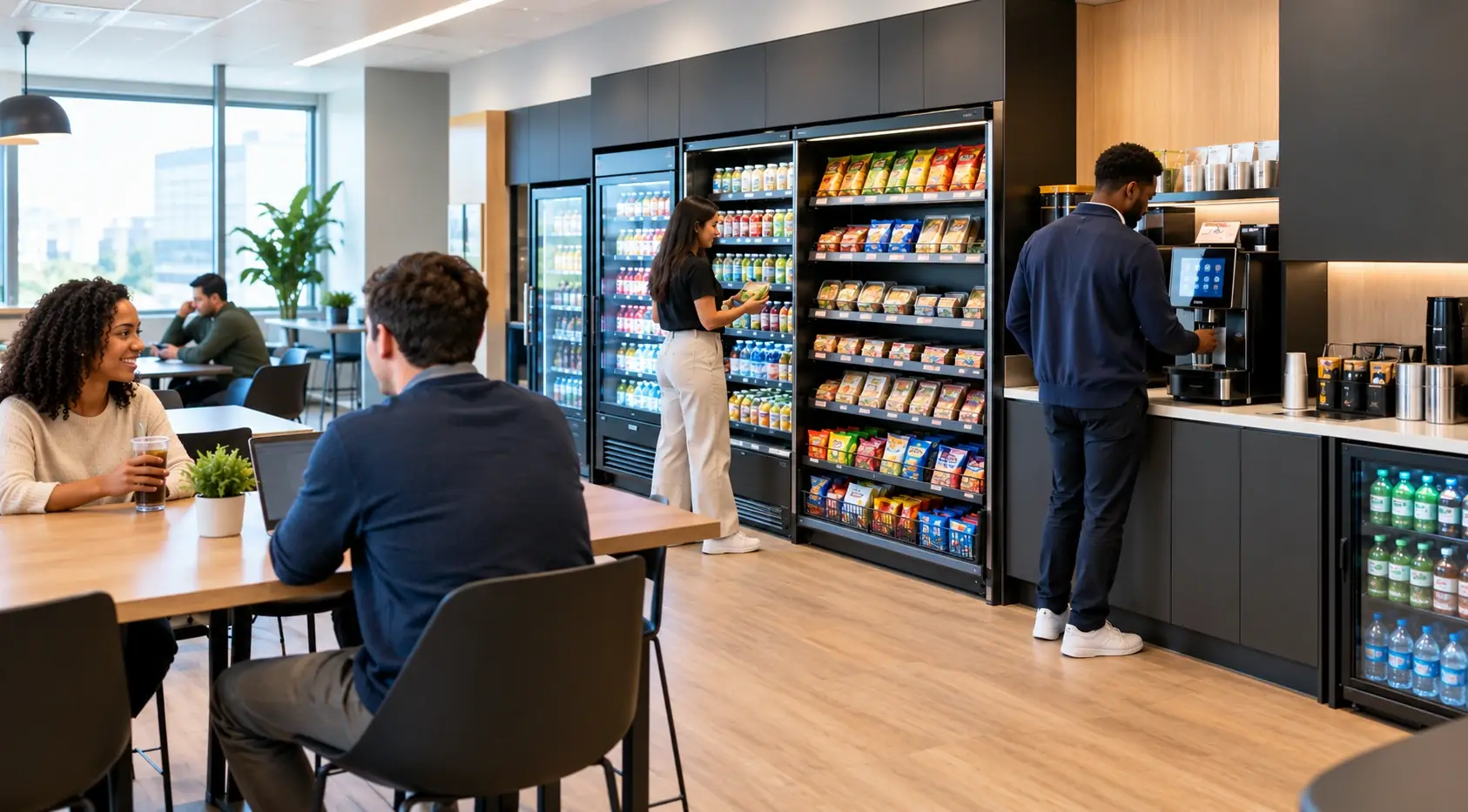
Healthcare, manufacturing, logistics, hospitality, and public safety environments often operate when nearby foodservice is closed or impractical. Employees may have short break windows, restricted site access, or safety concerns that make leaving difficult. Traditional vending can provide dependable access, while micro markets or autonomous coolers can add fresh meals and wider variety where demand supports them.
NAMA describes convenience services as meeting consumer needs everywhere and at any time. The workplace application is direct. The right self-service format can fill an access gap that a staffed cafeteria or local restaurant cannot economically cover around the clock.
Shift-based Assortment Should Match the Work Being Performed
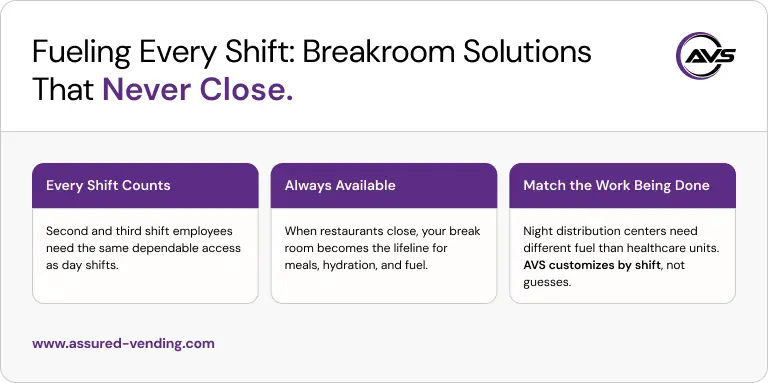
A night shift in a distribution center may need substantial food, hydration, and high-protein choices. A healthcare unit may need quick items that can be consumed during unpredictable breaks. A call center may place more value on beverage variety and controlled portions. One standardized machine plan across every site and shift can miss these distinctions.
AVS can use transaction data by hour and location to identify meal demand, beverage peaks, and product gaps. Product strategy can then reflect the actual work pattern rather than relying on assumptions about what night shift employees want.
Replenishment Timing Is Part of Fairness
If a machine is stocked at 8:00 AM, the first shift receives the fullest selection and later shifts receive what remains. Equal access may require changing delivery timing, adding facings for high-demand items, using a second service window, or protecting certain meal inventory for overnight demand.
Real-time inventory insight helps AVS see when popular items sell out and adjust product quantity or service timing. The goal is simple: later shifts should not be left with whatever remains after the busiest part of the day.
Hydration and Heat Conditions Need a Separate Plan
Texas facilities face heat exposure that can make hydration access an operating and safety priority. Filtered water, ice, refill stations, packaged beverages, and appropriate electrolyte choices may each have a role. Equipment location matters because a hydration point that is far from the work area may not be practical during a short break.
AVS can assess the physical site, workforce movement, and existing infrastructure before recommending a solution. The provider should remain within its service role and avoid medical claims, while helping the employer maintain dependable access and clear product information.
Service Recovery Must Work After Normal Business Hours
A payment failure, refrigeration issue, or empty cooler at midnight cannot wait until the next weekly meeting. The employer needs a clear support path, remote monitoring where available, and defined response expectations. Some issues can be prevented through telemetry. Others require a local technician or route response.
Employees can use a simple digital support path to report a failed payment, an empty selection, or an equipment issue. Because AVS is local to DFW, the technology is backed by people who can respond instead of placing the burden on the employer’s team.
Frequently Asked Questions
Which Workplaces Benefit Most from 24-hour Refreshment Access?
Healthcare, manufacturing, logistics, call centers, hospitality, public safety, and any operation with significant evening, night, or weekend staffing.
Does Every 24-hour Site Need a Micro Market?
No. The right format depends on headcount, security, food demand, available space, and service feasibility. Smart vending or autonomous coolers may be a better fit.
How Can Employers Avoid Favoring the First Shift?
Review transactions and stockouts by hour, include later shifts in discovery, adjust replenishment timing, and create service standards that apply across the full day.
Sources & Further Reading
Ready to Support Every Shift?
AVS can assess your schedules, break windows, hydration needs, and food access to create a refreshment program that works beyond traditional business hours. Assess Your Shift-Based Refreshment Needs.
Break Room Tips & Workplace Insights, Delivered to Your Inbox.
Get the latest product trends, expert tips, and exclusive AVS offers, straight to your inbox.